

The modern undergraduate experience is often a high-wire balancing act. Between attending back-to-back lectures, preparing for seminar discussions, keeping up with part-time work, and attempting to maintain a social life, time evaporates quickly. When you throw multiple long-form essay assignments into a single week, the entire system risks collapsing. Most students approach academic writing through a method known as “brute-forcing”—sitting down with a blank document on a Friday night and trying to type out thousands of words in a single, exhausting sitting.
The results of this approach are predictable: high stress, subpar writing, and completely ruined weekends. To break this cycle, you need a repeatable framework that treats writing not as a singular, overwhelming event, but as a series of small, manageable phases. By shifting your approach toward a modular study workflow, you can dismantle complex assignments into structured components, allowing you to produce stellar papers while protecting your personal time.
The Core Concept: What is a Modular Study Workflow?
A modular workflow is a time-management strategy that breaks down a major academic assignment into autonomous, bite-sized tasks called modules. Instead of looking at an assignment sheet and seeing a daunting 3,000-word research paper, you see a collection of distinct phases: a prompt analysis module, a source compilation module, a structural framing module, and an editing module.
The psychological benefit of this shift is immense. The human brain naturally resists vague, monumental goals because they trigger cognitive overload. When you tell yourself, “I need to write my entire history paper today,” your brain interprets that as a massive energy drain, leading to procrastination. When you tell yourself, “I am going to spend forty-five minutes extracting quotes from two sources,” the barrier to entry drops significantly. This structured approach is highly effective for global student workload management, transforming chaotic study habits into a predictable, low-stress routine.
Module 1: Prompt Deconstruction and Structural Framing
Every top-tier essay begins long before you type your first sentence. The absolute fastest way to waste a weekend is to write thousands of words, only to realize you completely misunderstood the core question. To prevent this, dedicate your first module entirely to dismantling the assignment rubric. Circle the directive verbs—such as analyze, critique, compare, or evaluate—because they tell you exactly what kind of intellectual heavy lifting the professor expects.
Once you understand the objective, build a rigid skeleton for your argument. A standard academic essay should follow a clear trajectory: a compelling hook, a highly specific thesis statement, a series of body paragraphs backed by empirical evidence, and a conclusion that highlights the broader implications of your findings. By treating the outline as a standalone module early in the week, you eliminate the terrifying “blank page syndrome.” When you finally sit down to draft, you are not inventing arguments; you are simply filling in a pre-constructed map.
Module 2: The Data Synthesis and Emulsion Phase
With your outline locked in, you can move on to gathering and synthesizing evidence. Instead of reading entire journal articles front-to-back—which eats up hours of valuable time—practice targeted scanning. Read the abstract, introduction, and conclusion first to verify if the study aligns with your thesis. If it does, extract the specific data points or quotes you need and drop them directly into your outline under the corresponding heading.
[Targeted Scanning] ➔ [Extract Key Quotes] ➔ [Embed Directly into Outline]
This phase is where many undergraduates experience structural friction. Synthesizing multiple, conflicting academic viewpoints into a smooth, cohesive narrative requires a deep understanding of academic formatting and advanced argument construction. When deadlines stack up across multiple modules, utilizing external resources like structural templates or comprehensive essay writing help systems can provide the necessary clarity. This intervention allows you to decouple raw research from complex sentence engineering, ensuring that your core analytical insights remain clear, well-supported, and perfectly aligned with institutional standards.
Module 3: Draft Segmentation (The “Shitty First Draft” Rule)
One of the greatest obstacles to fast, effective writing is the habit of editing while drafting. When you try to perfect every sentence, fix every comma, and choose the ultimate vocabulary word while simultaneously figuring out what point you are making next, your writing speed slows to a crawl. This internal friction kills your momentum and stretches a two-hour task into an all-day ordeal.
To bypass this, execute your drafting phase in strict, timed intervals using the “shitty first draft” rule. Your sole objective during this module is to get your thoughts out of your head and onto the screen as quickly as possible. If you cannot remember a specific date or a philosopher’s name, do not stop to search for it—write [INSERT DATE HERE] and keep moving forward. By separating the generation of ideas from the polishing of text, you can easily draft 800 to 1,000 words in a single, focused hour, leaving your weekends entirely untouched.
Module 4: Transitioning from Coursework to High-Stakes Applications
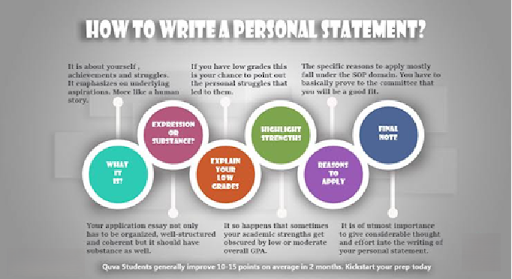
As you progress through your undergraduate degree, the writing skills you hone during weekly coursework will inevitably face higher stakes. Beyond standard terminal essays, you will eventually find yourself applying for independent research grants, study abroad opportunities, or competitive institutional funding. This is where your modular skills pay massive dividends, as high-stakes applications require an entirely different level of structural precision and personal narrative framing.
Writing a persuasive funding proposal requires you to blend rigorous academic scholarship with a compelling, authentic personal voice. Review committees read hundreds of applications, and they look for clear indicators of leadership potential, societal impact, and long-term vision. Because the margin for error in these scenarios is virtually non-existent, many ambitious undergraduates collaborate with professional academic consultants to ensure their portfolios stand out.
Working alongside the specialized editorial teams at Myassignmenthelp allows you to access tailored scholarship essay writing services that meticulously refine your prose. This targeted collaboration ensures that your personal statements are free from structural clichés and perfectly calibrated to meet the exact rubrics used by elite selection boards, maximizing your chances of securing critical funding without disrupting your current course schedule.
Module 5: The Two-Pass Editing System
The final module of the workflow is the editing phase, which should always be completed at least 24 hours after finishing your draft. Looking at your text with fresh eyes is the only way to catch logical gaps and awkward phrasing. To make this phase highly efficient, use a simple two-pass system:
- Pass One (Macro-Editing): Focus entirely on the structural flow and argumentative logic. Does every paragraph start with a clear topic sentence? Do your arguments transition smoothly from one point to the next? Does your conclusion directly answer the question posed in your introduction?
- Pass Two (Micro-Editing): Focus exclusively on mechanics, grammar, syntax, and citation accuracy. Read your essay aloud to instantly identify clunky phrasing, repetitive vocabulary, and run-on sentences.
Frequently Asked Questions (FAQ)
Q.1 How do I prevent procrastination when starting a new essay module?
Ans: The easiest way to beat procrastination is to reduce the scale of your immediate task. Never schedule a block of time called “Work on Essay.” Instead, schedule a specific 25-minute block called “Draft the first half of Section 2.” Giving your brain a clear, highly constrained, and achievable endpoint eliminates the anxiety that causes procrastination.
Q.2 Can a modular workflow work for short-notice assignments?
Ans: Yes. If an essay is due in 48 hours, you simply compress the timeframe of the modules rather than skipping them entirely. Spend 2 hours on prompt analysis and outlining, 3 hours on targeted research, 4 hours on rapid drafting, and 2 hours on editing. Skipping directly to drafting without an outline always takes longer in the long run.
Q.3 How do I adapt my standard essay voice for scholarship applications?
Ans: Standard academic essays are objective, analytical, and focused on external data. Scholarship applications are subjective, personal, and focused on you. To adapt your voice, use your academic achievements as the background setting, but keep your personal journey, long-term career goals, and individual values as the central focus of the narrative.
About The Author
My name is John Martin, and I am an academic content specialist and digital strategist dedicated to helping students bridge the gap between complex university rubrics and flawless execution. Over the years, I have collaborated extensively with Myassignmenthelp, developing actionable resources, structural frameworks, and writing methodologies that empower undergraduates across the globe to elevate their academic writing skills.