
Introduction
Have you ever purchased a foundation that looked perfect in the store but appeared orange, pink, or gray on your skin? The problem may not be your skin tone—it could be your undertone. Understanding how to find your undertone is one of the most important steps in selecting makeup, hair color, clothing, and accessories that complement your natural appearance.
Your undertone is the subtle hue beneath the surface of your skin. Unlike your skin tone, which can change due to sun exposure or seasonal variations, your undertone remains relatively constant throughout your life. Knowing whether you have warm, cool, neutral, or olive undertones can help you make better beauty and fashion choices.
This comprehensive guide explains everything you need to know about identifying your undertone using easy at-home tests and professional techniques.


What Is an Undertone?
An undertone is the underlying color beneath the surface of your skin. It influences how colors appear against your complexion and affects how makeup and clothing look on you.
While skin tone may be fair, light, medium, tan, deep, or dark, undertones generally fall into four categories:
- Warm
- Cool
- Neutral
- Olive
Understanding these categories helps create harmony between your natural coloring and the products you choose.
Why Knowing Your Undertone Matters
Identifying your undertone can dramatically improve your appearance. It helps you:
- Choose foundation shades accurately
- Select flattering lipstick colors
- Pick the right hair color
- Wear clothing that enhances your complexion
- Choose jewelry that complements your skin
Many beauty mistakes happen because people match products to their skin tone but ignore undertones.
The Difference Between Skin Tone and Undertone
Many people confuse skin tone with undertone.
| Skin Tone | Undertone |
|---|---|
| Surface color of skin | Underlying hue beneath skin |
| Can change with sun exposure | Usually remains constant |
| Fair to deep complexion range | Warm, cool, neutral, or olive |
| Visible immediately | Requires testing to identify |
A person with fair skin can have warm undertones, while someone with deep skin may have cool undertones.
The Four Main Undertone Categories
Warm Undertones
Warm undertones contain golden, yellow, peach, or golden-brown hues.
Common signs include:
- Skin looks golden
- Gold jewelry is flattering
- Earth tones look great
- Veins appear green
Cool Undertones
Cool undertones contain pink, red, or blue hues.
Common signs include:
- Skin appears rosy
- Silver jewelry looks best
- Jewel tones are flattering
- Veins appear blue or purple
Neutral Undertones
Neutral undertones are balanced between warm and cool.
Common signs include:
- Both silver and gold jewelry look good
- Most colors are flattering
- Veins appear both blue and green
Olive Undertones
Olive undertones have a greenish or muted appearance.
Common signs include:
- Skin can appear slightly gray or green
- Warm and cool products may both look off
- Earthy shades often work best
Method 1: Check Your Veins
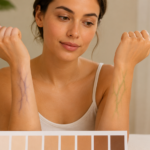
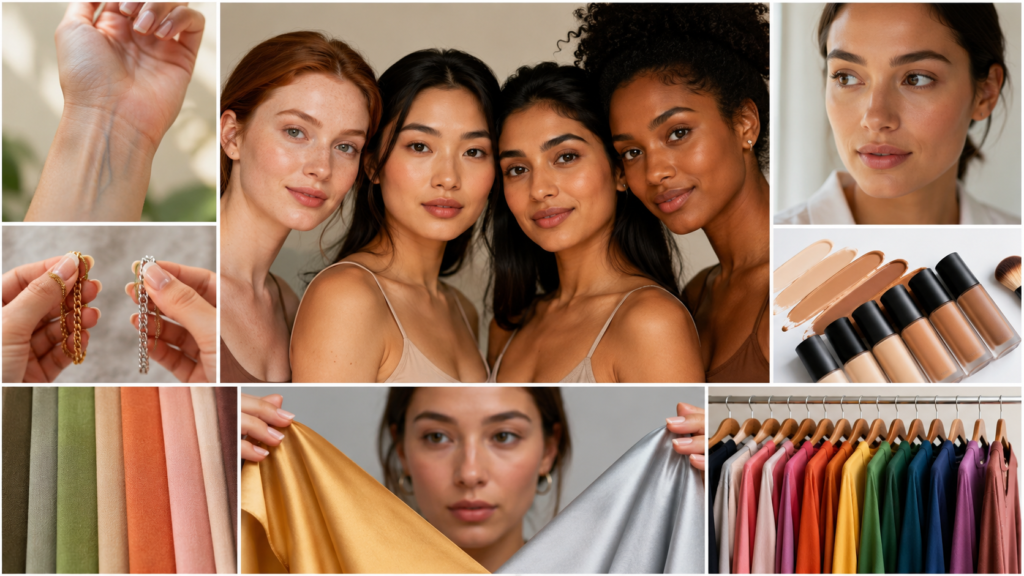
One of the easiest ways to determine your undertone is by examining the veins on your wrist.
Blue or Purple Veins
You likely have cool undertones.
Green Veins
You likely have warm undertones.
Blue-Green Veins
You likely have neutral undertones.
Mixed Results
You may have olive undertones.
Method 2: The Jewelry Test
The jewelry test is simple and surprisingly accurate.
Gold Jewelry
If gold jewelry enhances your complexion, you probably have warm undertones.
Silver Jewelry
If silver jewelry makes your skin glow, you likely have cool undertones.
Both Look Good
You may have neutral undertones.
Method 3: Observe How Your Skin Reacts to Sunlight
Your skin’s response to sun exposure can reveal undertone clues.
| Sun Reaction | Likely Undertone |
|---|---|
| Tans easily | Warm |
| Burns easily | Cool |
| Burns then tans | Neutral |
| Tans with greenish cast | Olive |
Remember that this test should be used alongside other methods for accuracy.
Method 4: Use a White Shirt Test
Stand in natural daylight wearing a pure white shirt.
Observe your complexion:
- Yellow or golden appearance = Warm
- Pink or rosy appearance = Cool
- Balanced appearance = Neutral
- Slightly green or gray cast = Olive
Natural daylight provides the most accurate results.
Method 5: Compare Gold and Silver Fabric
Hold gold and silver fabrics near your face.
The color that brightens your complexion and minimizes shadows often indicates your undertone.
- Gold = Warm
- Silver = Cool
- Both = Neutral
This technique is frequently used by professional color analysts.
Method 6: Examine Your Eyes
Eye color can provide additional clues.
Warm undertones often pair with:
- Amber eyes
- Golden brown eyes
- Hazel eyes with gold flecks
Cool undertones often pair with:
- Gray eyes
- Blue eyes
- Cool brown eyes
This method is not definitive but can support other findings.
Method 7: Look at Your Natural Hair Color
Natural hair color often reflects undertones.
| Hair Color Trait | Possible Undertone |
|---|---|
| Golden blonde | Warm |
| Ash blonde | Cool |
| Golden brown | Warm |
| Ash brown | Cool |
| Neutral brown | Neutral |
Hair color alone should not determine your undertone but can provide useful hints.
Method 8: Foundation Matching Test
Foundation shopping can reveal undertones quickly.
Warm Foundations
Typically labeled:
- Warm
- Golden
- Yellow
- Honey
Cool Foundations
Often labeled:
- Cool
- Pink
- Rose
- Beige
Neutral Foundations
Usually marked:
- Neutral
- N
If a warm foundation blends seamlessly, you likely have warm undertones.
Common Mistakes When Identifying Undertones
People often make these errors:
- Using artificial lighting
- Looking only at skin tone
- Ignoring multiple test results
- Judging undertones after tanning
- Choosing foundation based on shade alone
Combining several methods provides the most reliable answer.
Best Clothing Colors for Warm Undertones
Warm undertones typically shine in:
- Mustard yellow
- Olive green
- Camel
- Coral
- Peach
- Warm reds
- Chocolate brown
These shades enhance golden and peachy hues naturally.
Best Clothing Colors for Cool Undertones
Cool undertones often look best in:
- Sapphire blue
- Emerald green
- Lavender
- Magenta
- Navy
- Cool gray
- Icy pink
These colors complement pink and blue undertones.
Best Clothing Colors for Neutral Undertones
Neutral undertones enjoy flexibility.
Popular choices include:
- Soft white
- Taupe
- Navy
- Dusty rose
- Teal
- Charcoal
Most color families work beautifully with neutral skin.
Best Makeup Shades for Warm Undertones
Warm undertones often look stunning in:
- Peach blush
- Coral lipstick
- Bronze eyeshadow
- Golden highlighter
- Warm nude shades
These colors enhance natural warmth.
Best Makeup Shades for Cool Undertones
Cool undertones often suit:
- Pink blush
- Berry lipstick
- Plum eyeshadow
- Silver highlighter
- Cool nude shades
These tones complement rosy skin.
Best Makeup Shades for Neutral Undertones
Neutral undertones can wear:
- Rose blush
- Mauve lipstick
- Soft bronze eyeshadow
- Neutral nude palettes
This versatility makes shopping easier.
How Hair Color Relates to Undertones
Choosing the right hair color can transform your appearance.
Warm Undertones
Best choices:
- Honey blonde
- Golden brown
- Caramel
- Copper
Cool Undertones
Best choices:
- Ash blonde
- Platinum
- Cool brown
- Burgundy
Neutral Undertones
Most hair colors work well when matched properly.
Can Your Undertone Change?
Generally, undertones remain stable throughout life.
Factors that may temporarily affect appearance include:
- Sun exposure
- Skin conditions
- Makeup
- Lighting
However, your true undertone usually stays the same.
Professional Color Analysis
If you’re still unsure, professional color analysis can help.
Experts use:
- Draping techniques
- Controlled lighting
- Seasonal color systems
- Advanced complexion assessments
Professional analysis can provide highly personalized recommendations.
Quick Undertone Identification Chart
| Feature | Warm | Cool | Neutral | Olive |
|---|---|---|---|---|
| Veins | Green | Blue/Purple | Mixed | Mixed |
| Jewelry | Gold | Silver | Both | Both |
| Skin Appearance | Golden | Pink/Rosy | Balanced | Greenish |
| Best Colors | Earth Tones | Jewel Tones | Most Colors | Muted Earth Tones |
| Foundation Labels | Golden | Rose | Neutral | Olive |
Conclusion
Learning how to find your undertone can make a huge difference in your beauty and fashion choices. By examining your veins, testing jewelry, observing sun reactions, and using natural light assessments, you can accurately determine whether you have warm, cool, neutral, or olive undertones.
The best approach is to combine several methods rather than relying on just one test. Once you know your undertone, selecting flattering makeup, clothing, jewelry, and hair colors becomes much easier. Understanding this simple beauty secret can help you look more vibrant, confident, and naturally radiant every day.
Frequently Asked Questions
1. What is the easiest way to find my undertone?
The vein test and jewelry test are the quickest and easiest methods to determine undertones at home.
2. Can fair skin have warm undertones?
Yes. Skin tone and undertone are different. Fair skin can have warm, cool, neutral, or olive undertones.
3. Can dark skin have cool undertones?
Absolutely. People with deep skin tones can have cool, warm, neutral, or olive undertones.
4. Why does my foundation look orange?
Your foundation may have the wrong undertone, even if the shade depth matches your skin.
5. What undertone is most common?
Neutral undertones are often considered one of the most common categories because they contain a balance of warm and cool characteristics.
6. Is olive undertone warm or cool?
Olive undertones are unique and can contain both warm and cool characteristics, often with a subtle green cast.
7. Can I wear both gold and silver jewelry?
If both metals look flattering on you, you likely have neutral undertones.