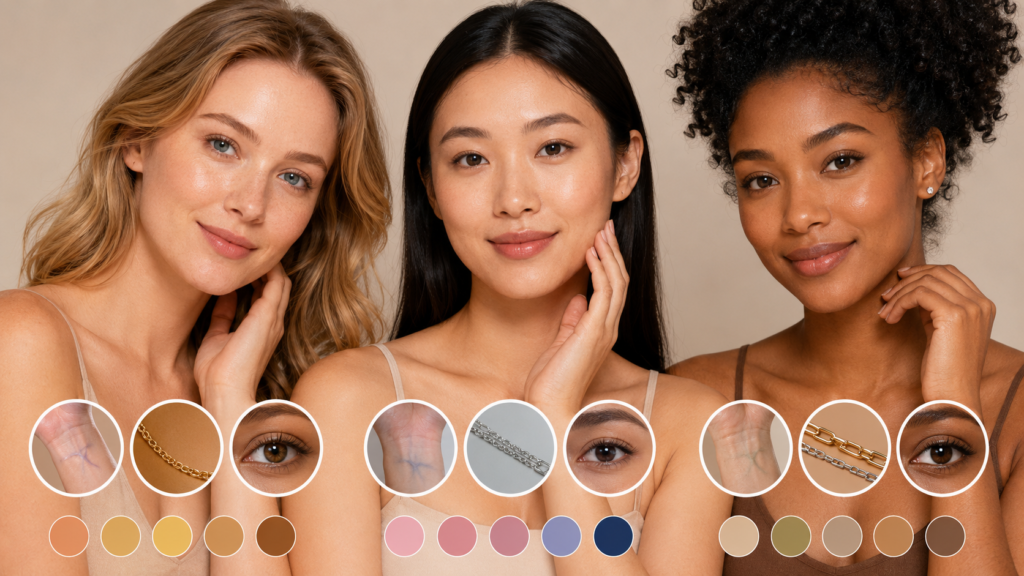

Understanding your skin undertone is one of the most important steps in choosing flattering makeup, clothing colors, jewelry, and even hair color. While many people know their skin tone—fair, light, medium, tan, or deep—not everyone understands their undertone.
Your undertone is the subtle hue beneath the surface of your skin. Unlike your skin tone, which may change due to sun exposure, undertones remain relatively constant throughout your life. Knowing whether you have warm, cool, or neutral undertones can help you make better beauty and fashion choices.
In this comprehensive guide, you’ll learn how to determine skin undertone using simple tests, understand the differences between undertone categories, and discover the best colors for your complexion.
Table of Contents
ToggleWhat Is a Skin Undertone?
A skin undertone is the subtle color that exists beneath the surface of your skin. It affects how colors appear against your complexion and influences which shades look most flattering on you.
Undertones are generally divided into three categories:
- Warm
- Cool
- Neutral
Unlike your skin tone, which can become darker or lighter depending on sun exposure and age, your undertone usually remains unchanged.
Why Knowing Your Undertone Matters
Identifying your undertone can improve many beauty and fashion decisions.
Benefits include:
- Finding the perfect foundation shade
- Choosing flattering lipstick colors
- Selecting complementary clothing colors
- Picking jewelry that enhances your complexion
- Choosing hair colors that look natural
People who understand their undertones often find shopping for cosmetics much easier.
The Three Main Undertone Categories
| Undertone | Characteristics | Best Metals |
|---|---|---|
| Warm | Yellow, golden, peachy hues | Gold |
| Cool | Pink, red, bluish hues | Silver |
| Neutral | Mix of warm and cool hues | Gold and Silver |
Understanding these categories is the first step in determining your undertone accurately.
Skin Tone vs. Skin Undertone
Many people confuse skin tone with undertone.
Skin Tone
Refers to the surface color of your skin:
- Fair
- Light
- Medium
- Tan
- Deep
Skin Undertone
Refers to the color beneath the skin surface:
- Warm
- Cool
- Neutral
For example, two people may both have medium skin tones, but one could have warm undertones while the other has cool undertones.
Signs of Warm Undertones
People with warm undertones often have:
- Golden or yellow hues beneath the skin
- Green-looking veins
- Better appearance in gold jewelry
- Easier tanning in sunlight
- Warm brown, hazel, or amber eyes
Warm undertones often create a naturally sun-kissed appearance.
Signs of Cool Undertones
Cool undertones are characterized by:
- Pink or rosy hues
- Blue or purple veins
- Better appearance in silver jewelry
- Tendency to burn before tanning
- Blue, gray, or deep brown eyes
Cool undertones often give skin a rosy or porcelain appearance.
Signs of Neutral Undertones
Neutral undertones combine warm and cool characteristics.
Common signs include:
- Both blue and green veins
- Looking equally good in gold and silver jewelry
- Balanced skin appearance
- Ability to wear many different colors
Neutral undertones are often considered the most versatile.
The Vein Test
The vein test is one of the easiest methods.
How to Perform It
- Stand in natural daylight.
- Look at veins on your wrist.
- Observe their color.
Results
| Vein Color | Undertone |
|---|---|
| Green | Warm |
| Blue or Purple | Cool |
| Both Blue and Green | Neutral |
This test works best in bright natural light.
The Jewelry Test
Jewelry can reveal a lot about your undertone.
Gold Jewelry Looks Better
You likely have warm undertones.
Silver Jewelry Looks Better
You likely have cool undertones.
Both Look Great
You likely have neutral undertones.
Try comparing gold and silver earrings or necklaces side by side.
The White Paper Test
This popular method can reveal subtle undertones.
Steps
- Hold a plain white sheet of paper beside your face.
- Stand in natural daylight.
- Compare your skin to the paper.
Results
- Yellow or golden appearance = Warm
- Pink or rosy appearance = Cool
- Neither obvious = Neutral
Avoid fluorescent lighting when performing this test.
The Sun Reaction Test
Your skin’s reaction to sunlight may provide clues.
| Reaction to Sun | Likely Undertone |
|---|---|
| Tans easily | Warm |
| Burns quickly | Cool |
| Sometimes burns, sometimes tans | Neutral |
Although not foolproof, this method can support other tests.
The Clothing Color Test
Certain clothing colors can reveal undertones.
Warm Undertones Look Great In
- Mustard yellow
- Olive green
- Camel
- Coral
- Warm red
Cool Undertones Look Great In
- Sapphire blue
- Emerald
- Lavender
- Magenta
- Cool gray
Neutral Undertones
Can wear both groups successfully.
Observe which colors make your skin look brighter and healthier.
The Eye and Hair Color Clues
Natural features often provide undertone hints.
Warm Undertones
- Golden brown eyes
- Hazel eyes
- Strawberry blonde hair
- Golden brown hair
Cool Undertones
- Blue eyes
- Gray eyes
- Ash brown hair
- Platinum blonde hair
Neutral Undertones
Can display a combination of both characteristics.
Testing Undertones with Foundation
Foundation shopping often reveals undertones quickly.
Warm Foundations
Usually labeled:
- Warm
- Golden
- Yellow
Cool Foundations
Often labeled:
- Cool
- Rose
- Pink
Neutral Foundations
Often labeled:
- Neutral
- Beige
A properly matched foundation should blend seamlessly into your skin.
Common Mistakes When Identifying Undertones
Many people make these errors:
Using Artificial Lighting
Indoor lighting can distort color perception.
Confusing Surface Redness
Rosacea or redness doesn’t necessarily indicate cool undertones.
Looking Only at Skin Tone
Undertones exist independently of skin depth.
Relying on One Test
Multiple tests provide more accurate results.
Best Makeup for Warm Undertones
Warm undertones pair beautifully with earthy shades.
Foundation
Choose:
- Golden
- Honey
- Warm beige
Blush
Try:
- Peach
- Apricot
- Coral
Lipstick
Best options include:
- Terracotta
- Warm red
- Peach nude
These shades enhance natural warmth.
Best Makeup for Cool Undertones
Cool undertones shine with rosy and blue-based shades.
Foundation
Choose:
- Cool beige
- Rose beige
- Pink-based formulas
Blush
Best options:
- Rose
- Berry
- Cool pink
Lipstick
Try:
- Plum
- Berry
- Blue-red
These colors complement cool complexions beautifully.
Best Makeup for Neutral Undertones
Neutral undertones enjoy exceptional flexibility.
Foundation
Choose neutral beige shades.
Blush
Options include:
- Soft peach
- Rose
- Mauve
Lipstick
Consider:
- Nude pink
- Soft berry
- Balanced red
Neutral undertones can experiment with a wide variety of colors.
Choosing Hair Colors Based on Undertones
Hair color can dramatically affect your appearance.
Warm Undertones
Best hair colors:
- Honey blonde
- Golden brown
- Caramel
- Copper
Cool Undertones
Best hair colors:
- Ash blonde
- Cool brown
- Espresso
- Burgundy
Neutral Undertones
Can wear:
- Beige blonde
- Chocolate brown
- Soft black
Selecting the right hair color can enhance natural beauty significantly.
Final Tips for Accurate Results
If you’re still unsure how to determine skin undertone, combine several tests rather than relying on just one.
Use:
- Vein test
- Jewelry test
- White paper test
- Clothing color test
When most results point toward the same category, you’ve likely found your undertone.
Remember that undertones don’t change dramatically over time, making this knowledge useful for years to come. Once you understand whether your complexion is warm, cool, or neutral, you’ll be able to confidently choose makeup, clothing, accessories, and hair colors that bring out your natural beauty.
Quick Undertone Comparison Table
| Feature | Warm | Cool | Neutral |
|---|---|---|---|
| Veins | Green | Blue/Purple | Both |
| Jewelry | Gold | Silver | Both |
| Sun Reaction | Tans Easily | Burns Easily | Mixed |
| Skin Hue | Yellow/Golden | Pink/Rosy | Balanced |
| Best Lip Colors | Coral, Peach | Berry, Plum | Both |
| Best Hair Colors | Caramel, Honey | Ash, Burgundy | Beige Blonde |
FAQs
1. How can I determine my skin undertone at home?
You can use the vein test, jewelry test, white paper test, and clothing color test under natural daylight.
2. Can my undertone change over time?
No. While skin tone may change due to sun exposure, undertones generally remain the same.
3. What is the most accurate undertone test?
Using multiple methods together provides the most reliable result.
4. Can dark skin have cool undertones?
Yes. Every skin depth can have warm, cool, or neutral undertones.
5. Why do foundations look orange on me?
You may be using a foundation with undertones that don’t match your skin.
6. Is neutral undertone rare?
No. Neutral undertones are quite common and allow greater flexibility with colors.
7. Can I wear both gold and silver jewelry if I have neutral undertones?
Yes. Neutral undertones typically look great with both metals.