
Your skin undertone plays a major role in determining which makeup shades, clothing colors, jewelry metals, and hair colors look best on you. While many people know their skin tone—fair, medium, tan, or deep—fewer understand their undertone. Taking an undertone test can help you make better beauty and fashion choices while enhancing your natural appearance.
In this comprehensive guide, you’ll learn everything about undertones, how to perform an undertone test at home, and how to use the results to select flattering colors and products.
Table of Contents
ToggleWhat Is an Undertone?
An undertone is the subtle hue beneath the surface of your skin. Unlike your skin tone, which can change due to tanning, sun exposure, or skincare treatments, your undertone remains relatively constant throughout your life.
Understanding your undertone helps you select colors that naturally complement your complexion. When you wear shades that match your undertone, your skin often appears healthier, brighter, and more balanced.
Many people mistakenly believe they have a warm or cool complexion based solely on skin depth. However, fair skin can have warm undertones, and deep skin can have cool undertones. This is why an undertone test is essential.
Why an Undertone Test Matters
Knowing your undertone can transform your beauty routine and wardrobe choices.
Benefits include:
- Choosing foundation shades more accurately
- Finding flattering lipstick colors
- Selecting ideal hair dye shades
- Building a wardrobe with complementary colors
- Picking jewelry that enhances your appearance
- Creating a cohesive personal style
An undertone test removes the guesswork from beauty and fashion decisions.
Types of Skin Undertones
There are three primary undertone categories.
| Undertone | Characteristics | Best Metals |
|---|---|---|
| Warm | Yellow, peach, golden hues | Gold |
| Cool | Pink, red, blue hues | Silver |
| Neutral | Mix of warm and cool tones | Gold and Silver |
Some experts also identify olive undertones as a separate category due to their unique greenish or gray appearance.
Undertone vs. Skin Tone
Many people confuse undertones with skin tones.
| Skin Tone | Undertone |
|---|---|
| Fair | Warm, Cool, or Neutral |
| Light | Warm, Cool, or Neutral |
| Medium | Warm, Cool, or Neutral |
| Tan | Warm, Cool, or Neutral |
| Deep | Warm, Cool, or Neutral |
Your skin tone describes the surface color of your skin, while your undertone refers to the underlying hue beneath the surface.
Signs of Warm Undertones
People with warm undertones often have:
- Golden or yellow hues beneath the skin
- Green-looking veins
- Better appearance in gold jewelry
- Easier tanning with less burning
- Preference for earthy colors
Warm undertones often create a naturally sun-kissed appearance.
Signs of Cool Undertones
Cool undertones usually display:
- Pink or blue hues
- Blue or purple veins
- Better appearance in silver jewelry
- Tendency to burn before tanning
- Flattering look in jewel tones
Cool undertones often create a rosy or porcelain-like complexion.
Signs of Neutral Undertones
Neutral undertones combine characteristics of warm and cool skin.
Typical signs include:
- Difficulty identifying vein color
- Looking good in both silver and gold jewelry
- Wide range of flattering colors
- Balanced skin appearance
Neutral undertones are often considered versatile because they work well with many shades.
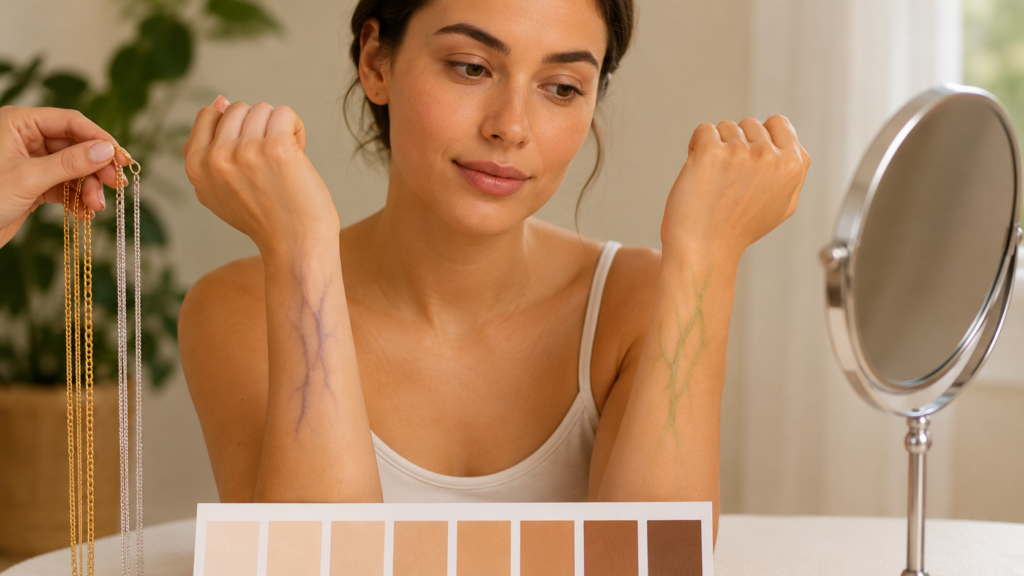
The Vein Test
The vein test is one of the most popular undertone tests.
How to Perform It
- Stand in natural daylight.
- Examine veins on your wrist.
- Observe their color carefully.
Results
| Vein Color | Likely Undertone |
|---|---|
| Green | Warm |
| Blue or Purple | Cool |
| Mix of Both | Neutral |
While useful, the vein test should be combined with other methods for greater accuracy.
The Jewelry Test
Jewelry can reveal your undertone surprisingly well.
Gold Jewelry
If gold makes your skin glow and appear healthier, you likely have warm undertones.
Silver Jewelry
If silver enhances your complexion and brightens your features, you may have cool undertones.
Both Look Good
If both metals suit you equally well, neutral undertones are likely.
The White Shirt Test
This simple test requires a pure white shirt or towel.
Steps
- Remove makeup.
- Stand in natural light.
- Hold a white fabric near your face.
Interpretation
- Yellow or golden appearance = Warm
- Pink or rosy appearance = Cool
- Balanced appearance = Neutral
The contrast often reveals hidden undertones effectively.
The Sun Reaction Test
Your skin’s reaction to sunlight offers useful clues.
| Sun Reaction | Possible Undertone |
|---|---|
| Tans easily | Warm |
| Burns quickly | Cool |
| Burns then tans | Neutral |
This method works best when combined with other undertone tests.
The Color Comparison Test
Compare how your skin looks against different colors.
Warm Colors
- Mustard yellow
- Orange
- Coral
- Olive green
Cool Colors
- Royal blue
- Emerald
- Lavender
- Magenta
If warm colors make your skin glow, you likely have warm undertones. If cool colors look more flattering, cool undertones may be present.
Undertone Test for Different Skin Tones
Undertones exist across every skin depth.
Fair Skin
Can be warm, cool, or neutral despite appearing pale.
Medium Skin
Often shows undertones clearly through vein and jewelry tests.
Tan Skin
May display warm or olive undertones but can also be cool.
Deep Skin
Frequently exhibits rich warm, cool, neutral, or olive undertones.
Every skin tone benefits from an accurate undertone test.
Common Undertone Test Mistakes
Avoid these common errors:
- Testing under artificial lighting
- Wearing makeup during analysis
- Using only one test method
- Confusing redness with cool undertones
- Assuming tanning equals warm undertones
Combining multiple tests provides the most reliable result.
Best Makeup Colors for Each Undertone
Makeup Guide
| Undertone | Foundation | Blush | Lipstick |
|---|---|---|---|
| Warm | Golden | Peach | Coral |
| Cool | Pink-based | Rose | Berry |
| Neutral | Balanced | Mauve | Nude Rose |
Choosing makeup based on undertones creates a more natural finish.
Best Hair Colors for Each Undertone
Warm Undertones
- Honey Blonde
- Golden Brown
- Caramel
- Copper
Cool Undertones
- Ash Blonde
- Platinum Blonde
- Cool Brown
- Burgundy
Neutral Undertones
- Beige Blonde
- Chocolate Brown
- Soft Auburn
- Balanced Brunette Shades
Hair colors aligned with undertones often look more natural and flattering.
Best Clothing Colors for Each Undertone
Warm Undertones
- Camel
- Olive
- Rust
- Mustard
- Coral
Cool Undertones
- Navy
- Sapphire
- Lavender
- Emerald
- Fuchsia
Neutral Undertones
- Dusty Rose
- Teal
- Soft Gray
- Cream
- Taupe
These colors enhance your complexion and create visual harmony.
Can Your Undertone Change?
Generally, undertones remain stable throughout life.
However, certain factors may affect how undertones appear:
- Seasonal tanning
- Lighting conditions
- Skin conditions
- Makeup products
- Aging
While your surface skin tone may fluctuate, your underlying undertone usually stays the same.
Professional Undertone Analysis
If home tests produce mixed results, consider professional color analysis.
Beauty professionals use:
- Advanced color draping
- Professional lighting
- Foundation matching systems
- Seasonal color analysis techniques
Professional assessments can provide highly accurate undertone identification.
Quick Undertone Test Summary
| Question | Warm | Cool | Neutral |
|---|---|---|---|
| Veins | Green | Blue/Purple | Mixed |
| Jewelry | Gold | Silver | Both |
| Sun Reaction | Tan Easily | Burn Easily | Both |
| Best Colors | Earthy | Jewel Tones | Variety |
| Foundation | Golden | Pink-Based | Balanced |
Conclusion
An undertone test is one of the simplest ways to improve your beauty and fashion choices. By understanding whether your undertone is warm, cool, or neutral, you can confidently choose makeup, hair colors, clothing, and accessories that complement your natural complexion.
The best approach is to combine multiple methods, including the vein test, jewelry test, white shirt test, and sun reaction test. Together, these techniques provide a reliable picture of your true undertone and help you build a more flattering personal style.
Frequently Asked Questions
1. What is the most accurate undertone test?
Combining several methods, such as the vein test, jewelry test, and white shirt test, usually provides the most accurate results.
2. Can I have both warm and cool undertones?
Yes. This is typically referred to as a neutral undertone.
3. Are undertones the same as skin tones?
No. Skin tone refers to the surface color of your skin, while undertones are the underlying hues beneath it.
4. Can makeup affect an undertone test?
Yes. Makeup can distort results, so tests should be performed on clean skin.
5. What if my veins appear both blue and green?
You likely have neutral undertones.
6. Do undertones matter when choosing foundation?
Absolutely. Matching undertones helps foundation blend seamlessly with your skin.
7. Can deep skin tones have cool undertones?
Yes. Every skin tone, from fair to deep, can have warm, cool, or neutral undertones.