
When it comes to modern men’s hairstyles, the debate between high fade vs low fade continues to be one of the most popular topics in barber shops across the USA. Both haircuts offer a clean, stylish appearance, but they create very different looks. Choosing the right fade can dramatically impact your overall style, face shape, and grooming routine.
Whether you’re looking for a bold and edgy haircut or a subtle and professional style, understanding the differences between high and low fades can help you make the best decision.
Table of Contents
ToggleWhat Is a Fade Haircut?
A fade haircut gradually transitions hair from longer lengths on top to shorter lengths on the sides and back. The fade creates a smooth blend that gives a clean and polished appearance.
Fade haircuts have become a staple in men’s grooming because they work with almost every hair type and personal style. Whether paired with a pompadour, crew cut, buzz cut, or textured crop, a fade can enhance the overall haircut.
The main difference between fade styles is where the tapering begins. This is exactly what separates a high fade from a low fade.
Understanding the High Fade
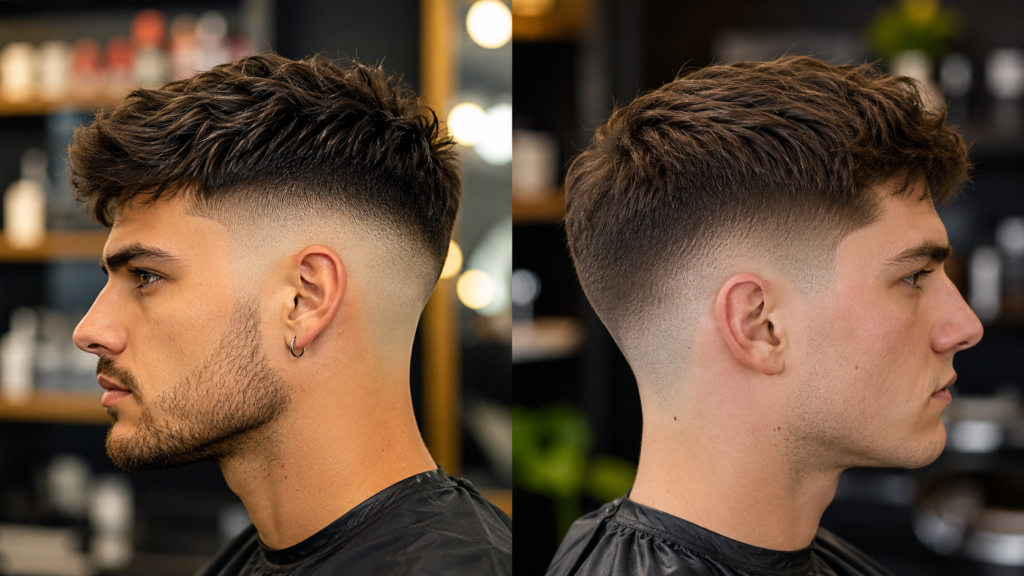
A high fade starts near the temples or above them. The fade quickly transitions from longer hair on top to very short sides.
This haircut creates strong contrast and instantly draws attention to the top section of the hair. Because of its sharp appearance, many men choose high fades for a modern and bold look.
Key Characteristics
- Starts high on the head
- Creates dramatic contrast
- Looks edgy and modern
- Works well with short and medium hairstyles
- Requires regular maintenance
Understanding the Low Fade
A low fade begins just above the ears and gradually tapers downward toward the neckline.
The transition is much softer compared to a high fade, creating a subtle and sophisticated appearance. Low fades are ideal for men who want a clean haircut without exposing too much scalp.
Key Characteristics
- Begins near the ears
- Offers a gentle transition
- Looks professional and classic
- Suitable for conservative environments
- Easier to maintain
High Fade vs Low Fade: Quick Comparison
| Feature | High Fade | Low Fade |
|---|---|---|
| Starting Point | Near temples | Above ears |
| Contrast | High | Moderate |
| Professional Look | Moderate | Excellent |
| Maintenance | High | Medium |
| Modern Appeal | Very High | High |
| Scalp Visibility | More | Less |
| Face Emphasis | Strong | Balanced |
| Best For | Bold styles | Versatile styles |
Key Differences Between High and Low Fades
The most obvious difference lies in the starting point of the fade.
A high fade removes more hair from the sides, creating a striking contrast between the top and sides. On the other hand, a low fade maintains more hair around the sides and offers a softer blend.
The result is two completely different visual effects despite both being fade haircuts.
Which Fade Looks More Modern?
Many modern hairstyle trends favor the high fade because it creates a clean and fashionable appearance.
Barbers frequently pair high fades with:
- Textured crops
- Faux hawks
- Pompadours
- Buzz cuts
- Quiffs
However, low fades remain extremely popular because they balance trendiness with professionalism.
Ultimately, both styles are modern when executed properly.
Best Face Shapes for High Fades
Oval Face
Men with oval faces can wear almost any fade style, including high fades.
Round Face
High fades help elongate the face and create a slimmer appearance.
Square Face
The sharp angles of a high fade complement strong jawlines exceptionally well.
Diamond Face
A high fade can highlight cheekbones and create a striking profile.
Best Face Shapes for Low Fades
Round Face
A low fade offers balanced proportions without excessive contrast.
Heart Face
The softer transition helps reduce emphasis on a wider forehead.
Long Face
Low fades preserve side volume, preventing the face from appearing even longer.
Oval Face
Oval face shapes can comfortably wear low fades for a timeless look.
High Fade for Straight Hair
Straight hair naturally showcases the sharp transitions of a high fade.
The clean contrast creates a polished and structured appearance that works particularly well with modern hairstyles.
Popular combinations include:
- High fade comb-over
- High fade pompadour
- High fade slick back
High Fade for Curly Hair
Curly hair paired with a high fade creates impressive texture contrast.
The faded sides make curls on top stand out dramatically, creating one of the most popular hairstyles among younger men.
Benefits include:
- Enhanced curl definition
- Reduced bulk on the sides
- Modern appearance
- Easier styling
Low Fade for Straight Hair
A low fade with straight hair delivers a clean and professional finish.
This combination is ideal for office workers, executives, and men who prefer understated grooming.
Popular choices include:
- Side part with low fade
- Crew cut with low fade
- Ivy League haircut
Low Fade for Curly Hair
Curly hair benefits greatly from a low fade because it preserves more natural volume.
Instead of creating dramatic contrast, the low fade gently shapes the hairstyle while maintaining texture.
This style works exceptionally well for men seeking a relaxed yet polished appearance.
Professional Appearance Comparison
High Fade
Pros:
- Sharp and trendy
- Fashion-forward
- Clean appearance
Cons:
- May appear too bold in some workplaces
- Requires frequent touch-ups
Low Fade
Pros:
- Professional
- Conservative
- Suitable for most office settings
Cons:
- Less dramatic
- Not as attention-grabbing
For business professionals, low fades often provide greater versatility.
Maintenance Requirements
| Maintenance Factor | High Fade | Low Fade |
|---|---|---|
| Barber Visits | Every 2-3 Weeks | Every 3-4 Weeks |
| Styling Time | Medium | Low |
| Touch-Up Frequency | High | Medium |
| Product Usage | Moderate | Low |
Because high fades expose more scalp and shorter hair, regrowth becomes noticeable faster.
Popular High Fade Styles
High Fade Buzz Cut
Minimalist and masculine.
High Fade Pompadour
Combines classic volume with modern fading.
High Fade Faux Hawk
Edgy and youthful.
High Fade Textured Crop
One of the most requested haircuts in recent years.
High Fade Quiff
Stylish and versatile.
Popular Low Fade Styles
Low Fade Side Part
Professional and timeless.
Low Fade Crew Cut
Simple and low maintenance.
Low Fade Slick Back
Perfect for formal occasions.
Low Fade Curly Top
Balances texture and sophistication.
Low Fade Comb Over
Modern yet workplace-friendly.
Celebrity Inspiration
Many celebrities have helped popularize fade haircuts.
High Fade Fans
- David Beckham
- Zayn Malik
- Drake
Low Fade Fans
- Ryan Reynolds
- Chris Evans
- Michael B. Jordan
These celebrities demonstrate how both fade styles can be adapted to different personal aesthetics.
How to Ask Your Barber
When visiting your barber, communicate clearly.
For a high fade, say:
“I’d like the fade to start around the temples with strong contrast.”
For a low fade, say:
“I’d like a fade that starts just above the ears with a gradual blend.”
Bringing reference photos can also improve results.
Common Mistakes to Avoid
Choosing Based Only on Trends
A trendy haircut may not suit your face shape.
Ignoring Maintenance
High fades require more frequent barber visits.
Forgetting Hair Texture
Hair texture significantly affects how fades look.
Poor Barber Communication
Always describe your desired style clearly.
Overlooking Workplace Requirements
Consider your professional environment before choosing a dramatic fade.
Final Verdict
When comparing high fade vs low fade, neither haircut is universally better. The right choice depends on your face shape, lifestyle, profession, and personal style.
Choose a high fade if you want:
- A bold look
- Strong contrast
- Modern styling
- Attention-grabbing appearance
Choose a low fade if you want:
- Professional versatility
- Softer transitions
- Easier maintenance
- Timeless appeal
Both styles remain among the most popular men’s haircuts in the USA because they offer clean, stylish, and adaptable looks for virtually every hair type.
FAQs
1. Is a high fade better than a low fade?
Neither is better overall. High fades are bolder, while low fades are more subtle and professional.
2. Which fade lasts longer?
Low fades generally look cleaner longer because hair growth is less noticeable.
3. Do high fades make your face look slimmer?
Yes. High fades can create the illusion of a longer, slimmer face.
4. Are low fades suitable for curly hair?
Absolutely. Low fades work exceptionally well with curly and textured hair.
5. Which fade requires more maintenance?
High fades require more frequent touch-ups to maintain their sharp appearance.
6. Can older men wear high fades?
Yes. High fades can look stylish at any age when paired with the right hairstyle.
7. Which fade is best for office jobs?
Low fades are generally considered the most professional and workplace-friendly option.