
Introduction
Choosing the right fade haircut can completely transform your appearance. Among the most popular men’s hairstyles today, the low fade and high fade stand out as stylish, versatile, and modern options. However, many people struggle to decide which one suits their face shape, hair texture, and personal style.
In this comprehensive guide, we’ll compare low fade vs high fade in detail, covering their differences, advantages, maintenance requirements, and the face shapes they complement best. By the end, you’ll know exactly which fade haircut is right for you.
What Is a Fade Haircut?
A fade haircut gradually transitions hair from longer lengths on top to shorter lengths on the sides and back. The fade creates a clean and polished appearance while allowing endless styling possibilities.
Barbers typically classify fades according to where the transition begins on the head:
- Low Fade
- Mid Fade
- High Fade
- Skin Fade
- Taper Fade
Among these, the low fade and high fade remain two of the most requested styles in American barbershops.
Understanding the Low Fade
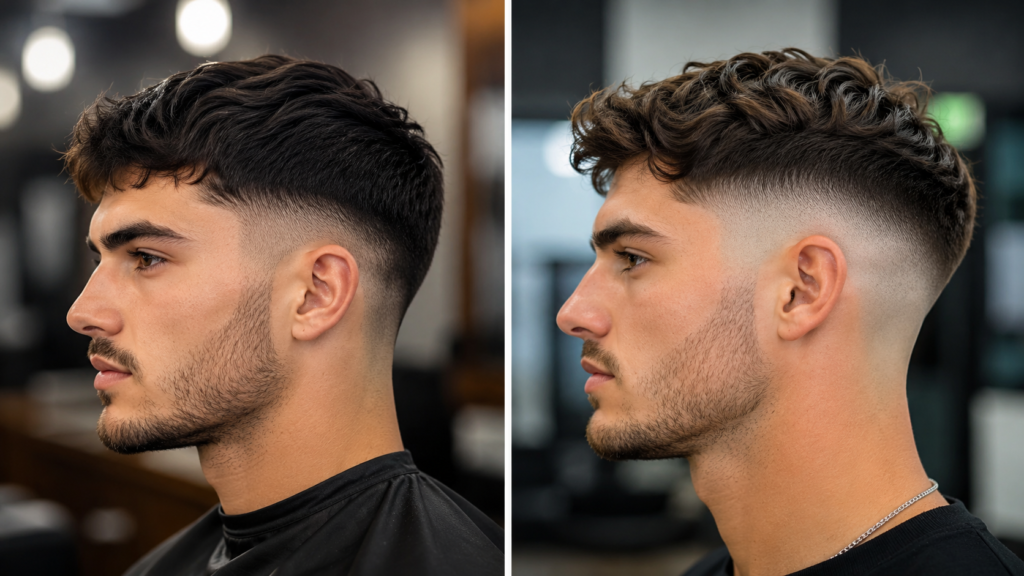
A low fade starts just above the ears and gradually blends downward toward the neckline. Because the transition begins lower on the head, it creates a subtle and professional appearance.
Key Characteristics of a Low Fade
- Starts near the ears
- Gentle transition
- More hair remains on the sides
- Professional and conservative appearance
- Works with most hairstyles
The low fade is ideal for men who want a clean look without exposing too much scalp.
Understanding the High Fade
A high fade starts much higher on the sides, usually near the temples. This creates a dramatic contrast between the longer hair on top and the shorter sides.
Key Characteristics of a High Fade
- Starts near the temples
- Sharp contrast
- Less hair on the sides
- Modern and bold appearance
- Highlights the hairstyle on top
High fades are popular among men who prefer trendy and eye-catching hairstyles.
Low Fade vs High Fade: Quick Comparison
| Feature | Low Fade | High Fade |
|---|---|---|
| Fade Starting Point | Above ears | Near temples |
| Appearance | Subtle | Bold |
| Professional Look | Excellent | Good |
| Contrast | Moderate | High |
| Maintenance | Moderate | Higher |
| Scalp Visibility | Minimal | More visible |
| Best for Offices | Yes | Sometimes |
| Trendiness | Timeless | Very Modern |
The History of Fade Haircuts
Fade haircuts originated in military grooming traditions. Soldiers required neat and practical hairstyles that complied with regulations.
Over time, fade haircuts became popular in barbershops throughout the United States. Today, fades are a staple in modern men’s fashion and continue evolving with new styling techniques.
Why Face Shape Matters
The right haircut can balance facial features and create a more symmetrical appearance.
A fade haircut affects:
- Face length
- Face width
- Jawline definition
- Forehead prominence
- Overall proportions
Understanding your face shape helps determine whether a low fade or high fade is more flattering.
Best Face Shapes for a Low Fade
Oval Face Shape
Men with oval faces are fortunate because almost every haircut works well.
A low fade enhances natural proportions without creating excessive contrast.
Round Face Shape
Low fades add structure while maintaining balanced width around the face.
Adding volume on top can make the face appear longer and slimmer.
Diamond Face Shape
Diamond-shaped faces often benefit from low fades because they avoid making the cheekbones appear overly prominent.
Heart Face Shape
A low fade helps balance a wider forehead and narrower chin.
Best Face Shapes for a High Fade
Square Face Shape
The sharp lines of a high fade complement strong jawlines and angular features.
Rectangular Face Shape
A high fade creates a striking appearance and highlights masculine facial structure.
Oval Face Shape
Oval faces can successfully wear both low and high fades.
Triangle Face Shape
High fades help balance wider jawlines by drawing attention upward.
Low Fade vs High Fade for Round Faces
Men with round faces often seek hairstyles that create the illusion of length.
Low Fade Benefits
- Maintains side volume
- Creates balanced proportions
- Offers versatility
High Fade Benefits
- Lengthens facial appearance
- Creates sharper angles
- Enhances modern styling
For most round faces, a high fade with textured volume on top tends to provide the strongest slimming effect.
Low Fade vs High Fade for Thick Hair
Thick hair offers many styling possibilities.
Low Fade with Thick Hair
- Maintains fullness
- Easier transitions
- More classic appearance
High Fade with Thick Hair
- Removes bulk
- Easier management
- Strong visual contrast
Men with very thick hair often appreciate the lighter feel of a high fade.
Low Fade vs High Fade for Curly Hair
Curly hair pairs exceptionally well with fades.
Low Fade and Curly Hair
The gradual transition creates a balanced silhouette while preserving natural curl volume.
High Fade and Curly Hair
A high fade makes curls the focal point of the hairstyle by removing excess volume on the sides.
Low Fade vs High Fade for Straight Hair
Straight hair showcases fade transitions particularly well.
Advantages of Low Fade
- Professional appearance
- Smooth blending
- Versatile styling
Advantages of High Fade
- Sharp definition
- Modern aesthetic
- Strong contrast
Maintenance Comparison
| Maintenance Factor | Low Fade | High Fade |
|---|---|---|
| Barber Visits | Every 3–4 Weeks | Every 2–3 Weeks |
| Styling Time | Low | Moderate |
| Home Care | Easy | Moderate |
| Grow-Out Appearance | Better | Faster Noticeable Growth |
Low fades generally require fewer touch-ups.
Professional Appearance
Many professionals choose low fades because they maintain a polished look suitable for corporate environments.
High fades can also appear professional when paired with neat styling, though they often project a more fashion-forward image.
Popular Hairstyles with a Low Fade
Textured Crop
A textured crop paired with a low fade creates a contemporary yet approachable appearance.
Side Part
The side part remains one of the most timeless combinations with a low fade.
Slick Back
A slick back with a low fade blends classic and modern aesthetics.
Pompadour
The pompadour adds height while maintaining sophistication.
Popular Hairstyles with a High Fade
Faux Hawk
The high fade enhances the dramatic effect of a faux hawk.
Quiff
A quiff with a high fade creates a youthful and stylish appearance.
Buzz Cut
High fades elevate simple buzz cuts into modern statement styles.
Curly Top
Curly hair becomes the center of attention when paired with a high fade.
Celebrity Inspiration
Many celebrities have embraced fade haircuts.
Celebrities Who Favor Low Fades
- Professional athletes
- Business leaders
- Actors seeking classic styles
Celebrities Who Favor High Fades
- Musicians
- Fashion influencers
- Trend-focused athletes
These examples demonstrate the versatility of both fade styles.
Common Mistakes When Choosing a Fade
Ignoring Face Shape
Selecting a fade solely because it’s trendy may not produce the most flattering results.
Forgetting Hair Texture
Hair type significantly affects how a fade appears.
Choosing Extreme Contrast
Some men may find very high fades too dramatic for their lifestyle.
Neglecting Maintenance
Regular barber visits are essential for keeping fades sharp.
How to Ask Your Barber for the Right Fade
Bring reference photos and discuss:
- Face shape
- Hair texture
- Daily styling routine
- Desired maintenance level
- Professional requirements
Clear communication helps your barber deliver the perfect result.
Low Fade vs High Fade: Pros and Cons
| Low Fade Pros | Low Fade Cons |
|---|---|
| Professional | Less dramatic |
| Easy maintenance | Less trendy |
| Works for all ages | Less contrast |
| Smooth grow-out | May appear conservative |
| High Fade Pros | High Fade Cons |
|---|---|
| Modern appearance | More maintenance |
| Strong contrast | Faster grow-out visibility |
| Great for thick hair | Not ideal for every workplace |
| Highlights top styling | More scalp exposure |
Which Fade Is Best for You?
Choose a Low Fade if you:
- Work in a professional environment
- Prefer classic styles
- Want easier maintenance
- Like subtle transitions
Choose a High Fade if you:
- Prefer modern trends
- Want maximum contrast
- Have thick hair
- Enjoy bold hairstyles
Final Verdict
When comparing low fade vs high fade, neither haircut is universally better. The ideal choice depends on your face shape, hair texture, lifestyle, and personal preferences.
A low fade offers timeless sophistication and versatility, making it perfect for professional settings and everyday wear. A high fade delivers a bold, contemporary look that emphasizes facial features and modern styling.
If you’re uncertain, consult an experienced barber who can assess your face shape and recommend the fade that best enhances your appearance.
Frequently Asked Questions (FAQs)
1. Is a low fade better than a high fade?
Neither is inherently better. Low fades are more subtle, while high fades offer stronger contrast and a trendier appearance.
2. Which fade makes your face look slimmer?
A high fade often makes the face appear longer and slimmer, especially when combined with volume on top.
3. Are high fades still in style?
Yes. High fades remain one of the most popular men’s haircuts in the USA and worldwide.
4. Which fade requires less maintenance?
Low fades generally require fewer touch-ups and grow out more naturally.
5. Can curly hair work with a high fade?
Absolutely. High fades can make curls stand out and create a stylish contrast.
6. Is a low fade professional?
Yes. Low fades are among the most workplace-friendly haircut options available.
7. How often should I get a fade haircut?
Most men refresh their fade every 2–4 weeks, depending on hair growth and desired sharpness.